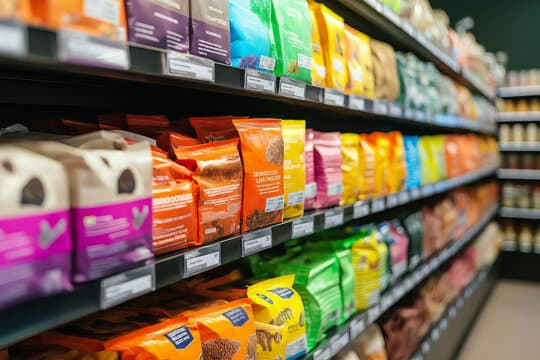
Branded Pet Treats & Chews Sourcing & Distribution
Treats and chews are a common category for buyers testing finished-goods distribution before committing to a private-label range, given lower typical order sizes and faster retail turnover. This page covers how sourcing an existing branded treats or chews line works for both dog and cat products, and where it fits alongside a broader sourcing strategy that may also include private-label food categories.

Why treats and chews are a common entry point
Treats and chews typically carry lower minimum order quantities than core dog or cat food formats, faster retail sell-through, and lower price sensitivity from end consumers, which makes the category a common place for a buyer to test finished-goods distribution before committing to a full private-label programme in food. An existing branded treats line lets a retailer add a differentiated item to a category set quickly, without the development cycle a new private-label recipe requires.
Format range within treats and chews
The category spans dental chews, jerky and meat-based treats, biscuits and baked treats, and functional treats (joint, calming, dental-health positioning). Each format has its own production process and shelf-stability profile, which affects lead time and minimum order size similarly to how format affects dog and cat food sourcing — a jerky-style treat and a baked biscuit don't run on the same production line.
Compliance considerations for treats
Treats generally fall under lighter regulatory requirements than complete-and-balanced food, since most aren't making a complete-nutrition claim, but ingredient sourcing, labeling, and any health or functional claims (joint support, dental health) still need to meet the destination market's rules. A branded treats line moving between markets should have its labeling and any functional claims reviewed against the destination framework before distribution begins.
Distribution rights for treats and chews
As with food categories, territory and exclusivity for a branded treats line are negotiated per arrangement rather than standardized. Because treats often move faster through retail than core food, buyers should also clarify replenishment and reorder terms alongside territory scope — a treats line's retail velocity makes consistent restock reliability especially important.
Have questions before you keep reading?
Get pricing, MOQs and lead times for your market.
Lead time and order flexibility
Because treats and chews typically carry lower MOQs than core food formats even in private label, the lead-time advantage of finished-goods sourcing is somewhat smaller here than in dog or cat food — but it's still real, since the product, packaging, and any claims substantiation are already complete rather than needing development.
Retail and distributor channel fit
Branded finished treats fit retail chains wanting to round out a category set with a recognizable item, and distributors adding treats alongside a core food distribution relationship. It's also a common category for buyers testing a new market's retail relationships before expanding into higher-commitment core food distribution — the lower financial commitment makes treats a practical way to prove out a new channel relationship first.
What buyers should clarify before sourcing
Before pursuing a branded treats or chews line, be clear on target format (dental, jerky/meat, baked, functional), any functional claims required, destination market, and expected reorder frequency — these shape which finished-goods options fit and how replenishment terms should be structured.
Ready to move forward?
Connect with our team to structure your order, timeline and volumes.
Seasonal and limited-run treat products
Treats and chews are also where seasonal or limited-run branded products come up more often than in core food — holiday-themed treats, limited flavor runs, or short promotional lines. For these, finished-goods sourcing is frequently the only practical option: the volume and timeline of a seasonal item rarely justify a full private-label development cycle, but an existing branded seasonal product can be brought in and sold within the relevant window. Buyers considering seasonal treats should confirm production and shipping lead times carefully against the actual selling window, since a seasonal product arriving late loses most of its retail value.

How Candora Petcare sources branded treats
Candora Petcare sources treats and chews across both private-label and finished-goods paths, matched to your target format and market through the same supply network used across the business. Start with your target format and destination market, and we'll work from there toward what's available. This applies equally to standing categories like dental chews and to shorter-window seasonal or limited-run products, since the sourcing conversation is the same regardless of how long the item is expected to stay on shelf.
FAQ
Frequently asked questions
Often yes — treats typically carry lower minimum order quantities and faster retail turnover than core food, making them a lower-commitment way to test finished-goods distribution before expanding into food categories.
Yes — any functional or health claim on a treats product needs to meet the destination market's labeling and substantiation rules, which should be reviewed before distribution begins in a new market.
Dental chews, jerky and meat-based treats, baked biscuits, and functional treats are all sourced as finished goods, though each runs on different production infrastructure affecting lead time and order size.
Yes — treats typically move faster through retail than core food, so consistent restock and reorder terms matter alongside territory and exclusivity when negotiating a distribution arrangement.
Yes — many buyers run finished-goods treats alongside a private-label core food range, sourcing each category based on what fits best rather than committing to one model across the whole portfolio.
Yes — treats and chews sourcing covers both dog and cat products across private-label and finished-goods paths, based on the buyer's target format and market.
Yes, and this is one of the strongest use cases for finished-goods sourcing in treats — a seasonal or limited-run item rarely justifies a full private-label development cycle, so an already-produced branded seasonal treat can be secured and brought to market within the relevant selling window instead. Confirm lead times carefully against your actual selling window before committing.
Confirm production capacity and typical turnaround for repeat orders, not just the initial batch — because treats move quickly through retail, a supplier that can't reliably replenish stock creates out-of-stock risk that undermines the speed advantage finished-goods sourcing is supposed to provide in the first place.
Yes — because treats generally carry lower MOQs and shorter production lead times than core dog or cat food, they're a common way to test a new retail channel or distributor relationship with less commitment. A buyer can use an initial treats order to validate demand and the working relationship before expanding into higher-volume food categories with the same supply source, which limits downside if the channel or relationship doesn't work out as expected.
Ready to get started?
Contact our team to discuss volumes, pricing, and supply structures for your market.