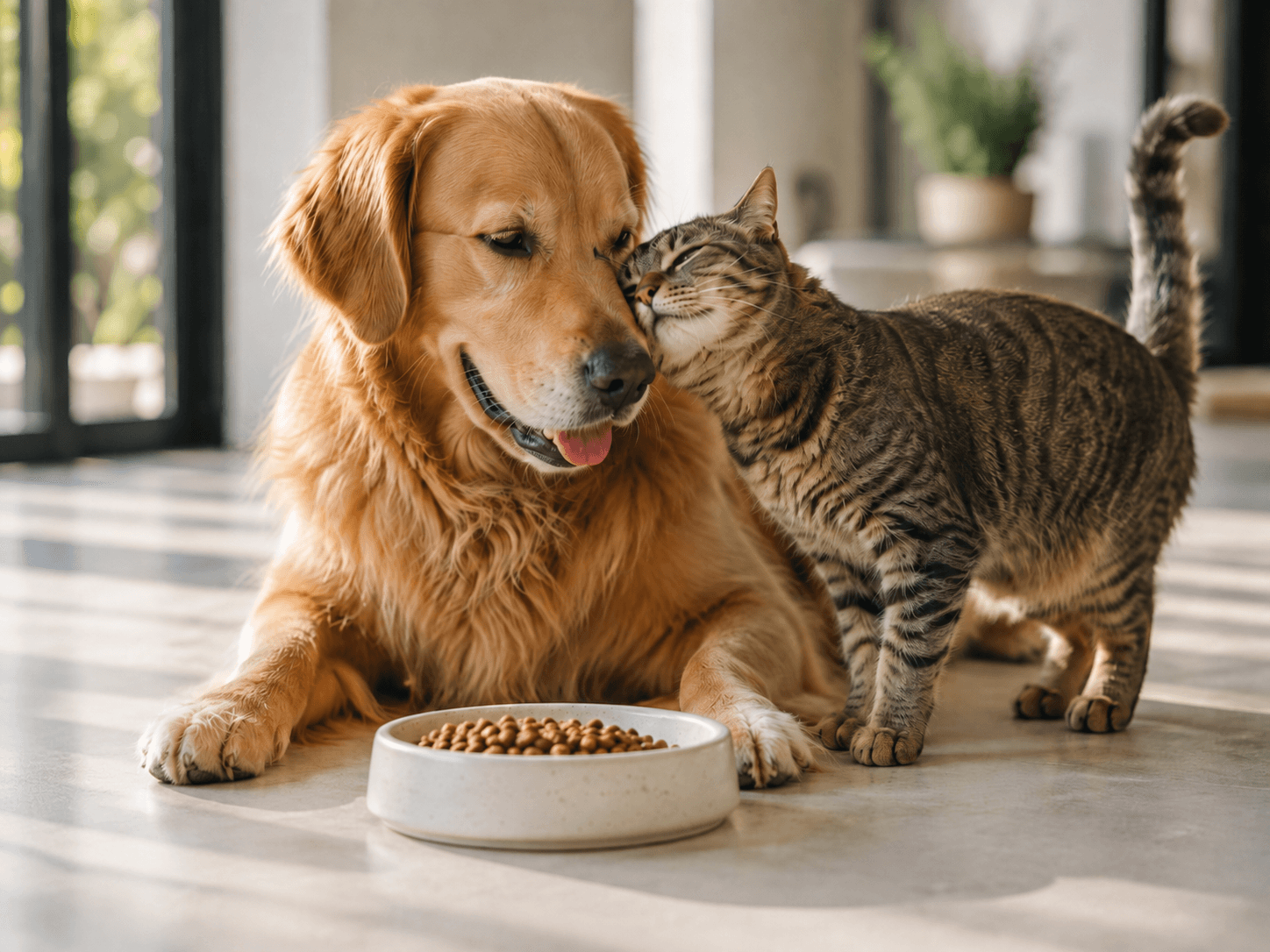
Cat Food Wholesale in the UK
Cat food sourcing into the UK follows the same post-Brexit IPAFFS process and standard VAT treatment as dog food, but the category's wet-food skew adds its own logistics and production-scheduling considerations. This guide covers the cat-food-specific detail on top of our general UK market guide.

UK import process for cat food
As with dog food, cat food entering Great Britain requires IPAFFS pre-arrival notification and UK-format health certification, regardless of EU or non-EU origin. See our full UK market guide for the country-level import process detail that applies across pet food categories. Treat this as its own dedicated process for cat food specifically, given the added complexity of the category's wet-food skew.
UK nutrient standards for cat food
UK cat food nutrient standards closely track FEDIAF's cat-specific guidelines (including taurine requirements) in practice, since the UK retained EU feed law at Brexit — but confirm current UK requirements specifically rather than assuming permanent equivalence, particularly for functional or life-stage-specific formulations. This confirmation is worth repeating periodically rather than treating it as a one-time check, given how the two frameworks can drift apart over time.

VAT treatment for cat food in the UK
Cat food is standard-rated at 20% in the UK, the same treatment as dog food — there is no cat-food-specific exception comparable to the working dog food zero-rating, since that exception is specifically tied to a working animal's function. Build this into margin models for both dry and wet cat food formats equally, since the VAT treatment doesn't vary by format.
Wet food logistics for UK-bound shipments
Given cat food's wet-format skew, buyers should confirm canning/pouching production capacity and scheduling with a UK-experienced manufacturer specifically, since wet food MOQs and lead times typically run less flexible than dry kibble regardless of destination market.
Have questions before you keep reading?
Get pricing, MOQs and lead times for your market.
Private label and bulk cat food sourcing for the UK
Buyers building a UK cat food range through private label or bulk wholesale should reference our cat food private label manufacturer and cat food bulk wholesale guides for the sourcing mechanics, then confirm UK IPAFFS shipping experience specifically with the manufacturer. This confirmation matters more for cat food than dog food given the added wet-format production and certification complexity.
UK labelling requirements for cat food
UK cat food labels must meet UK-specific statutory requirements — a formally separate framework from EU labelling since Brexit — including accurate life-stage claims and cat-specific nutrient substantiation. Have UK label content reviewed independently rather than assuming an EU-compliant cat food label transfers automatically.
UK retail channels for cat food
Cat food reaches UK consumers through specialty pet retail, general grocery, and online channels, with functional positioning (urinary health, hairball control, indoor formula) often carrying stronger presence in specialty retail — relevant context when planning channel strategy alongside formulation decisions. A value-positioned dry kibble range, by contrast, is more likely to find its primary volume through general grocery and online channels.
Evaluating a manufacturer's UK cat food experience
Ask specifically about recent UK shipment history and wet-food production capacity, since IPAFFS requirements have evolved since Brexit and cat-specific formulation experience doesn't automatically carry over from a manufacturer's dog food track record. A manufacturer that can speak specifically to both points, with recent examples, is a stronger partner than one offering only general reassurance about their overall UK export capability.
Ready to move forward?
Connect with our team to structure your order, timeline and volumes.
Wet food logistics considerations specific to the UK
Wet cat food entering the UK is subject to the same IPAFFS notification and health certificate requirements as dry kibble, but buyers should confirm the manufacturer's UK certificate templates cover wet formats specifically — a certificate validated for dry kibble shipments doesn't automatically extend to canned or pouched product without separate confirmation. This is worth raising explicitly with a prospective supplier rather than assuming general UK shipping experience covers every format equally, since the gap often only surfaces at the border.
Planning a pilot order before scaling cat food volume in the UK
A palletised pilot order for UK-bound cat food serves the same dual validation purpose as it does for dog food — testing both the product and the full IPAFFS-to-warehouse process — but is particularly valuable here given the added format complexity of a wet-heavy cat food range. See our bulk pet food container programme guide for the general economics of moving from pilot to full-container volume, and use the pilot specifically to confirm wet format certificates and Border Control Post handling before scaling to a full container commitment.

How Candora Petcare supports cat food sourcing into the UK
Candora Petcare coordinates IPAFFS notification, UK-format health certification, and UK label compliance for cat food buyers across dry and wet formats, alongside the wider UK import planning covered in our UK market guide — managing documentation and production scheduling as a single, dedicated point of contact.
FAQ
Frequently asked questions
Yes — both require IPAFFS pre-arrival notification and UK-format health certification, regardless of EU or non-EU origin.
20%, the standard rate, the same treatment as dog food. There's no cat-food equivalent to the working dog food zero-rating exception.
Fairly closely, since the UK retained EU feed law at Brexit — but confirm current UK-specific requirements rather than assuming permanent equivalence, especially for functional formulations.
No — UK labelling is a formally separate framework since Brexit. Have UK label content reviewed independently, including life-stage and cat-specific nutrient claims.
Cat food's wet-format skew means canning/pouching MOQs and lead times typically run less flexible than dry kibble, regardless of destination market — confirm this with the manufacturer specifically.
Not necessarily — ask specifically about wet food production capacity and cat-specific formulation experience, since these don't automatically carry over from an existing UK dog food supply relationship.
Ready to get started?
Contact our team to discuss volumes, pricing, and supply structures for your market.