Private Label Wet Pet Food Manufacturer: A Buyer's Guide
Wet and canned pet food is manufactured on a fundamentally different production line than kibble — retort thermal processing instead of extrusion — which changes almost every sourcing decision from MOQ to timeline. This guide covers what a buyer should know before commissioning a private label wet pet food programme.

Why wet food manufacturing is a different process than kibble
Dry kibble is made by extrusion — dough is cooked and shaped under pressure, then dried. Wet and canned pet food is made by retort processing: the formula is filled into its final can, pouch, or tray and then thermally sterilized under pressure, which is what gives it shelf-stable room-temperature storage without preservatives. This means the packaging line and the cooking process are the same step for wet food, unlike dry food where extrusion and packaging are separate. A manufacturer with strong dry-food capability doesn't automatically have retort capability — confirm a prospective supplier actually runs wet lines, not just dry.
Choosing a format: cans, pouches, or trays/tubs
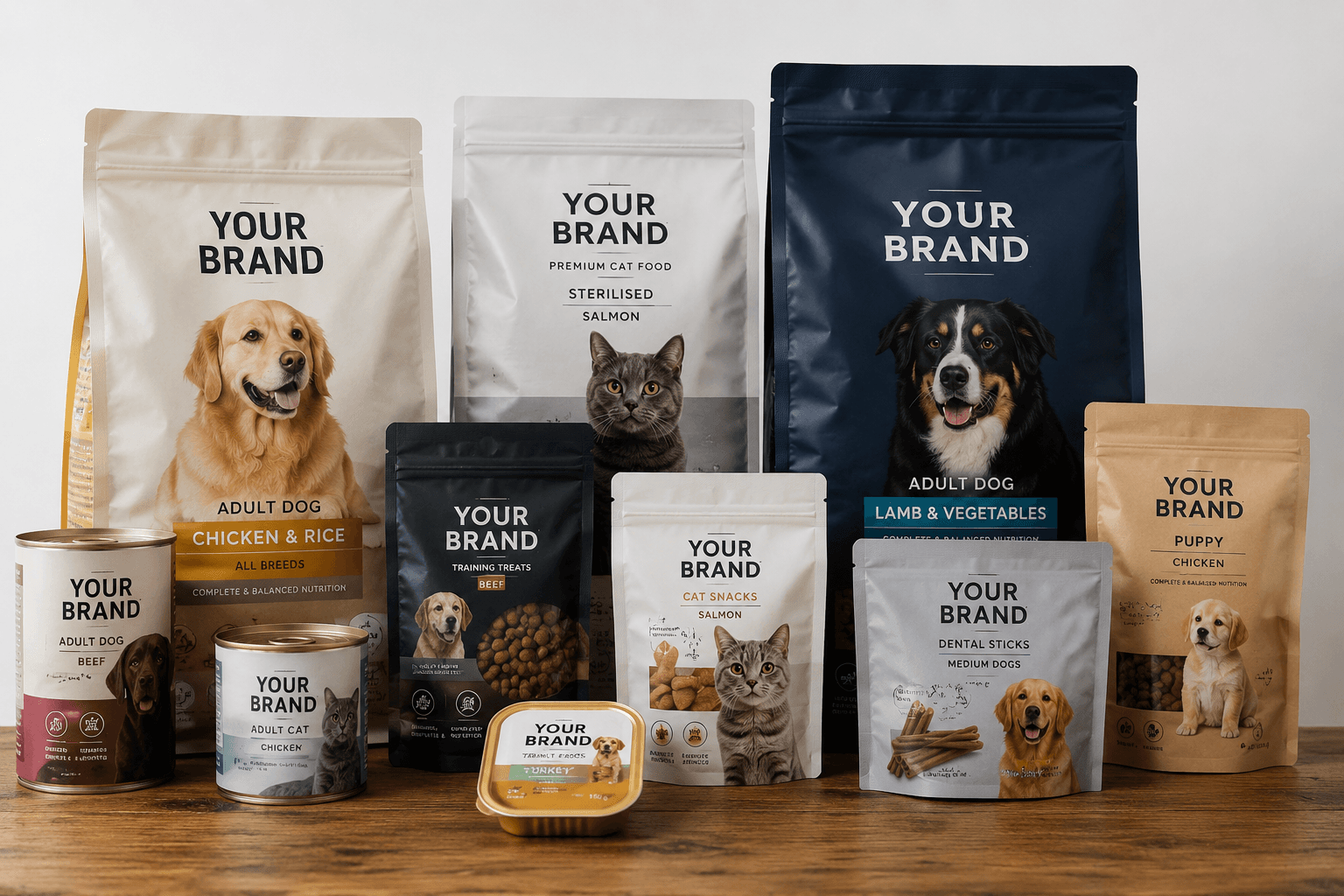
Cans remain the lowest-cost, most widely available retort format and suit private label programmes prioritizing shelf presence and cost. Pouches (stand-up or flat) have grown fastest over the past decade — lighter for freight, resealable in some formats, and often perceived as more premium on shelf, at a real cost-per-unit premium over cans. Trays and tubs sit at the premium end, typically used for pate or mousse textures aimed at a boutique or vet-channel positioning. Format choice should follow your target retail channel and price tier, not just personal preference — a value-tier private label line rarely justifies tray packaging economics.
MOQ ranges for private label wet food
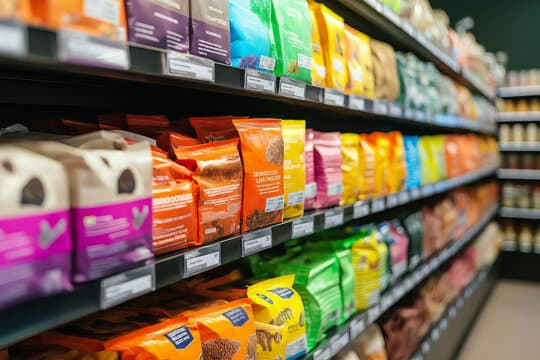
Retort production lines have real changeover costs between formulas, which pushes minimum order quantities meaningfully higher than dry food private label. A first production run commonly starts in the tens of thousands of units per SKU for can format, with some co-packers offering lower entry points on pouch lines for buyers testing a range before committing to full-scale volume. Confirm MOQ per SKU, not per order — a private label programme launching three flavors at once needs to clear MOQ on each one individually unless the manufacturer explicitly allows a blended minimum.
Shelf-life and retort process validation
Because retort sterilization is what makes wet food shelf-stable, the thermal process itself must be validated for your specific formula, fill weight, and container — not just approved once at the manufacturer level. This typically involves a commercial sterility test and an accelerated or real-time shelf-life study, with most private label wet food programmes carrying a validated shelf life in the 12-24 month range at ambient storage. Ask for the process validation documentation for your exact formula before finalizing production, not a general statement that the manufacturer's retort process is validated.
Have questions before you keep reading?
Get pricing, MOQs and lead times for your market.
AAFCO and FEDIAF compliance for wet formulas
Wet food's high moisture content (typically 75-82%) means its nutrient profile has to be assessed on a dry-matter basis to compare fairly against AAFCO or FEDIAF nutritional adequacy standards, not read directly off the label's as-fed guaranteed analysis. A manufacturer experienced in wet food formulation should already build recipes to hit dry-matter-adjusted targets — ask specifically how they validate nutritional adequacy for wet formulas, since it's a genuinely different calculation than dry food.
Packaging and labeling considerations specific to wet food
Can labeling is typically a wrap-around pressure-sensitive label or a directly printed can, while pouch formats need a barrier film rated for retort temperatures — a standard flexible pouch film will fail during thermal processing if it isn't retort-grade. Confirm your packaging supplier (if separate from the co-packer) understands retort-grade material requirements before finalizing pouch artwork, since a film substitution late in the process can delay a production run by weeks.
Timeline from brief to production-ready product
A private label wet food programme using an existing formula and standard can or pouch format typically runs 10-16 weeks from finalized brief to shipped product — longer than dry food private label, largely because of process validation and shelf-life testing. A genuinely new formula adds real formulation and re-validation time on top of that. Build the longer timeline into a launch plan rather than assuming wet food moves at the same pace as a dry-food private label programme.
Ready to move forward?
Connect with our team to structure your order, timeline and volumes.
Common mistakes buyers make sourcing private label wet food
The most common mistakes are assuming dry-food MOQs and timelines apply to wet food, specifying a non-retort-grade pouch film during packaging design, and skipping formula-specific shelf-life validation to hit an earlier launch date. Each of these creates real downstream cost — reprinted packaging, a delayed launch, or a recalled shelf-life claim — that's cheaper to avoid upfront than to fix after production.

How Candora Petcare supports private label wet food sourcing
Candora Petcare sources private label wet and canned pet food the same needs-based way we approach the rest of our range — coordinating format selection, retort process validation, and compliance documentation as a single point of contact, whether you're launching a single can SKU or a multi-format wet food line.
FAQ
Frequently asked questions
MOQ is typically higher than dry food due to retort changeover costs — commonly tens of thousands of units per SKU for cans, with some co-packers offering lower entry points on pouch lines for a first test run. Confirm MOQ applies per SKU, not per order.
It depends on positioning: cans suit cost-focused, high-shelf-presence programmes; pouches suit a lighter-freight, more premium positioning; trays and tubs suit boutique or vet-channel pate/mousse products at the highest price point.
Typically 10-16 weeks from finalized brief to shipped product using an existing formula and standard packaging — longer than dry food because of retort process validation and shelf-life testing. A new formula adds further time.
The nutrient profile has to be assessed on a dry-matter basis given wet food's high moisture content (typically 75-82%), which is a different calculation than reading dry food's as-fed analysis directly. Confirm your manufacturer validates against dry-matter-adjusted targets.
Most validated retort programmes carry a 12-24 month ambient shelf life, but this must be validated for your specific formula, fill weight, and container — not assumed from a general manufacturer claim.
Yes — pouches must use a retort-grade barrier film rated for thermal processing. A standard flexible pouch film will fail during retort sterilization, so confirm this before finalizing packaging artwork.
Yes — we coordinate format selection, retort process validation, and compliance documentation for private label wet food programmes the same way we do across the rest of our pet-care range.
Ready to get started?
Contact our team to discuss volumes, pricing, and supply structures for your market.
Related
Explore more
Private Label
Private Label Pet Food: The Complete Manufacturer Guide
Dog Food
Dog Food Private Label Manufacturer: A Buyer's Guide
Cat Food
Cat Food Private Label Manufacturer: A Buyer's Guide
Certifications
AAFCO Pet Food Certification: The Complete Buyer's Guide
Private Label
Private Label Pet Food MOQs: What to Expect by Format