Private Label Pet Food: The Complete Manufacturer Guide
Private label pet food lets a retailer or distributor put their own brand on a proven formulation without owning a factory. This guide is the starting point for buyers evaluating whether — and how — to build a private label pet food range, covering manufacturer selection, the private label process end to end, and where to go deeper on MOQs, packaging, and category-specific detail.

What private label pet food actually means
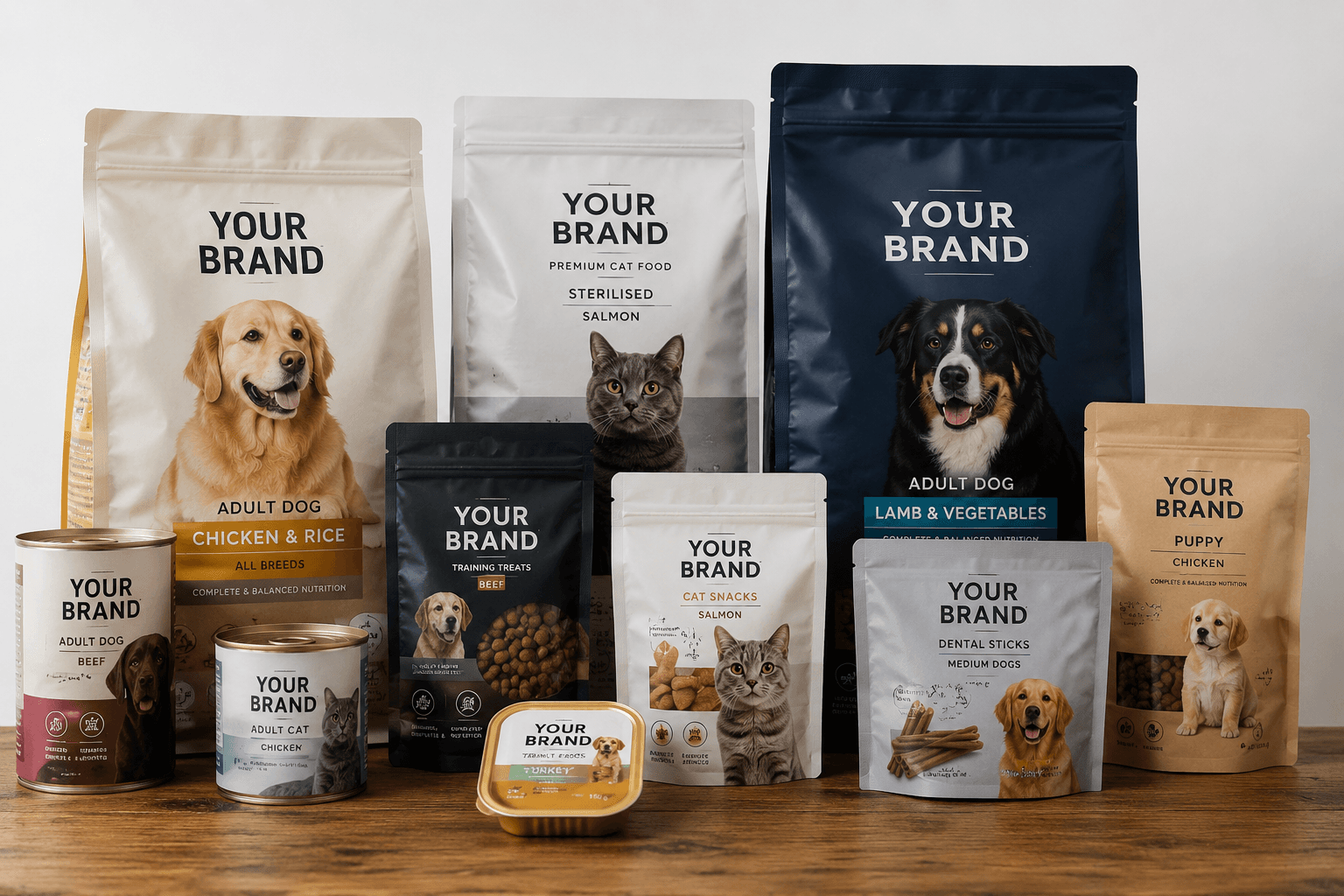
Private label means selecting a formulation from a manufacturer's existing recipe library — a dry kibble, a wet food line, a treat — and packaging it under your own brand rather than the manufacturer's. This is distinct from contract manufacturing (OEM), where the formulation itself is custom-built to your specification. Most buyers starting a private label range should expect to work from an existing recipe first, since it's faster to market and carries lower minimum order quantities than a custom formulation.
Why buyers build a private label pet food range
The commercial case for private label is straightforward: retailers and distributors capture more margin on an own-brand product than they do reselling a national brand, and a private label range builds customer loyalty to the retailer rather than to a third-party brand. In pet food specifically, private label has grown fastest in categories where formulation differentiation matters less than price and packaging — standard dry kibble and treats — while functional and premium positioning still often runs through contract manufacturing instead.
How to evaluate a private label pet food manufacturer
Start by requesting the manufacturer's existing formulation catalogue for your target category (dog food, cat food, treats) rather than assuming all private label suppliers offer the same range. Ask specifically about their nutrient adequacy substantiation (AAFCO or FEDIAF formulation), production certifications, and whether they can support your target markets' labelling requirements. A manufacturer's willingness to provide a factory audit or third-party certification documentation upfront is a reasonable signal of how transparent the relationship will be later.
The private label process, start to finish
A typical private label programme runs: formulation selection from the catalogue, packaging and label design (your artwork, their production specs), a sample run for approval, and then first production once samples are signed off. Buyers should expect 6-10 weeks from formulation selection to first production run for a straightforward dry kibble private label programme, longer for wet food or treats depending on the manufacturer's production scheduling.
Have questions before you keep reading?
Get pricing, MOQs and lead times for your market.
Minimum order quantities for private label pet food
Private label MOQs vary by format and manufacturer, but are generally lower than custom OEM formulations since no new recipe development is required — see our dedicated MOQ guide for category-specific ranges. As a general rule, dry kibble carries the lowest private label MOQs, wet food (cans and pouches) runs higher due to canning/pouching line minimums, and treats fall somewhere between the two depending on format.
Packaging, labelling, and brand ownership
Private label packaging is typically fully customisable — your brand name, logo, and design — while the underlying bag or can structure follows the manufacturer's existing production tooling unless you're ordering at a volume that justifies custom packaging tooling. Label content (guaranteed analysis, ingredient list, feeding guidelines) must match the actual formulation and target market's regulatory requirements; see our packaging and labelling guide for the compliance side of this in more depth.
Private label vs. contract manufacturing (OEM)
If your differentiation strategy is brand, price, and packaging rather than the formulation itself, private label is faster and cheaper to launch than OEM. If you need a specific protein source, functional claim, or format not available in a manufacturer's existing catalogue, contract manufacturing is the right path — expect a longer timeline and higher MOQs in exchange for a genuinely differentiated product. Many buyers start with private label to prove out a category before investing in OEM development for a hero SKU.
Ready to move forward?
Connect with our team to structure your order, timeline and volumes.
Common mistakes buyers make with private label pet food
The most common mistake is assuming private label formulations are interchangeable across manufacturers — recipe quality, palatability, and nutrient substantiation vary meaningfully between suppliers even within the same product category. The second most common mistake is underestimating packaging lead time, which is often the actual bottleneck rather than production capacity. Buyers should also confirm exclusivity terms (can the manufacturer sell the same base formulation to a competitor under a different label) before committing to a launch.
How Candora Petcare supports private label programmes
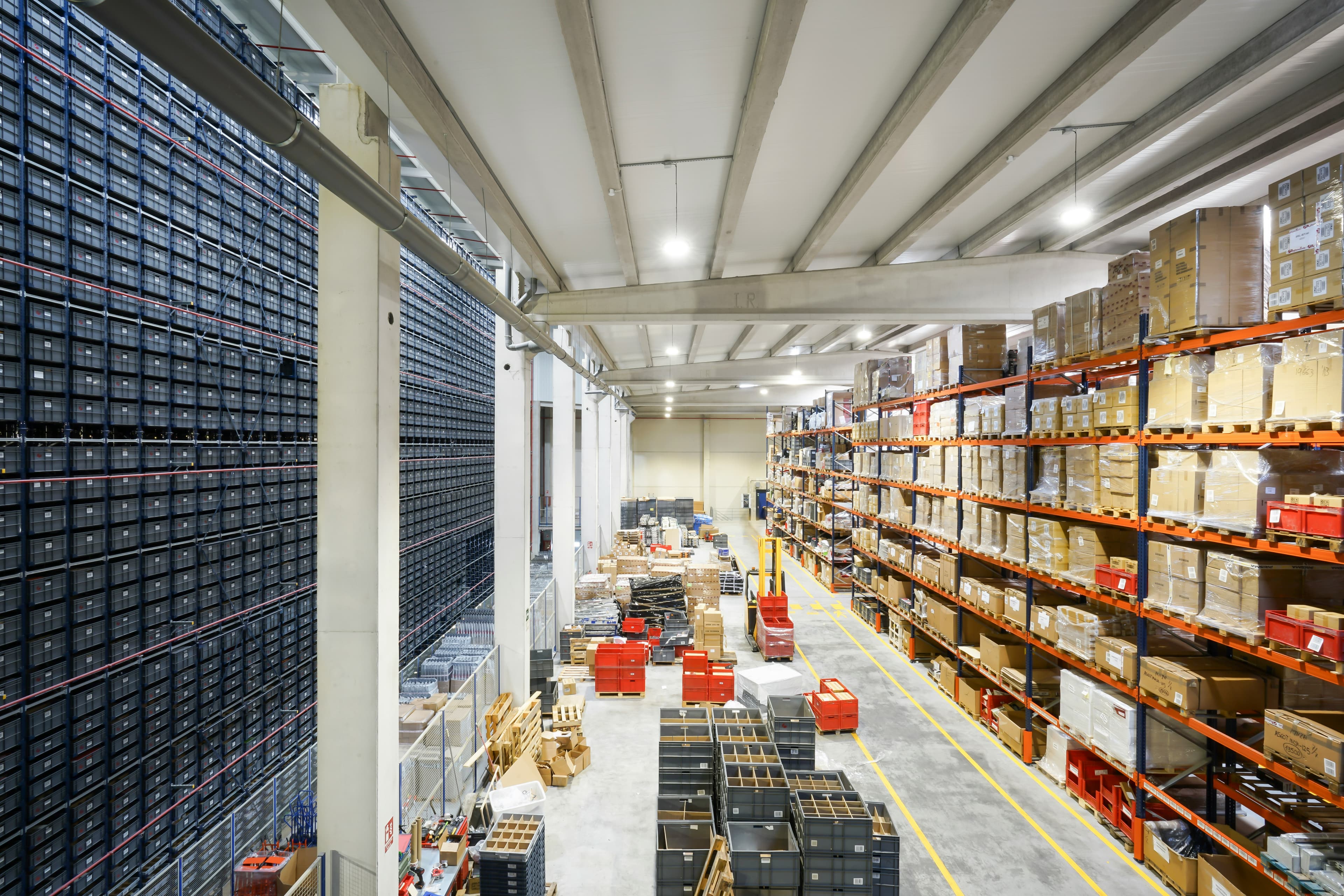
Candora Petcare works with certified factory partners across dog food, cat food, treats, and supplements categories, coordinating formulation selection, packaging development, and production scheduling as a single point of contact. We help buyers evaluate whether private label or contract manufacturing fits their specific brand and volume goals before committing to either path.
FAQ
Frequently asked questions
Private label means selecting from a manufacturer's existing formulation catalogue and adding your brand; contract manufacturing (OEM) means a custom formulation built to your specification. Private label is faster and cheaper; OEM is more differentiated but takes longer.
A straightforward dry kibble private label programme typically takes 6-10 weeks from formulation selection to first production run, though wet food and treats can take longer depending on the manufacturer's production scheduling.
Yes — brand name, logo, and design are typically fully customisable, though the underlying bag or can structure usually follows the manufacturer's existing production tooling unless volume justifies custom tooling.
Generally yes — private label uses an existing formulation, avoiding the development costs and higher MOQs typically associated with a custom OEM recipe.
Their formulation catalogue for your target category, nutrient adequacy substantiation (AAFCO/FEDIAF), production certifications, and willingness to provide factory audit or certification documentation.
It depends on the manufacturer and contract terms — confirm exclusivity explicitly before committing to a launch, since some manufacturers will sell the same base recipe to multiple private label clients.
Ready to get started?
Contact our team to discuss volumes, pricing, and supply structures for your market.