Bulk Wholesale vs. Private Label: Two Different Pet Food Sourcing Strategies
Bulk wholesale and private label solve different problems for a buyer. Bulk wholesale is about sourcing existing finished product at the lowest possible cost and fastest possible speed; private label is about building distinct brand equity on top of a sourced or co-developed recipe. Neither is universally better — the right choice depends on whether your business model is built on margin from volume or margin from brand differentiation.

Two different sourcing philosophies
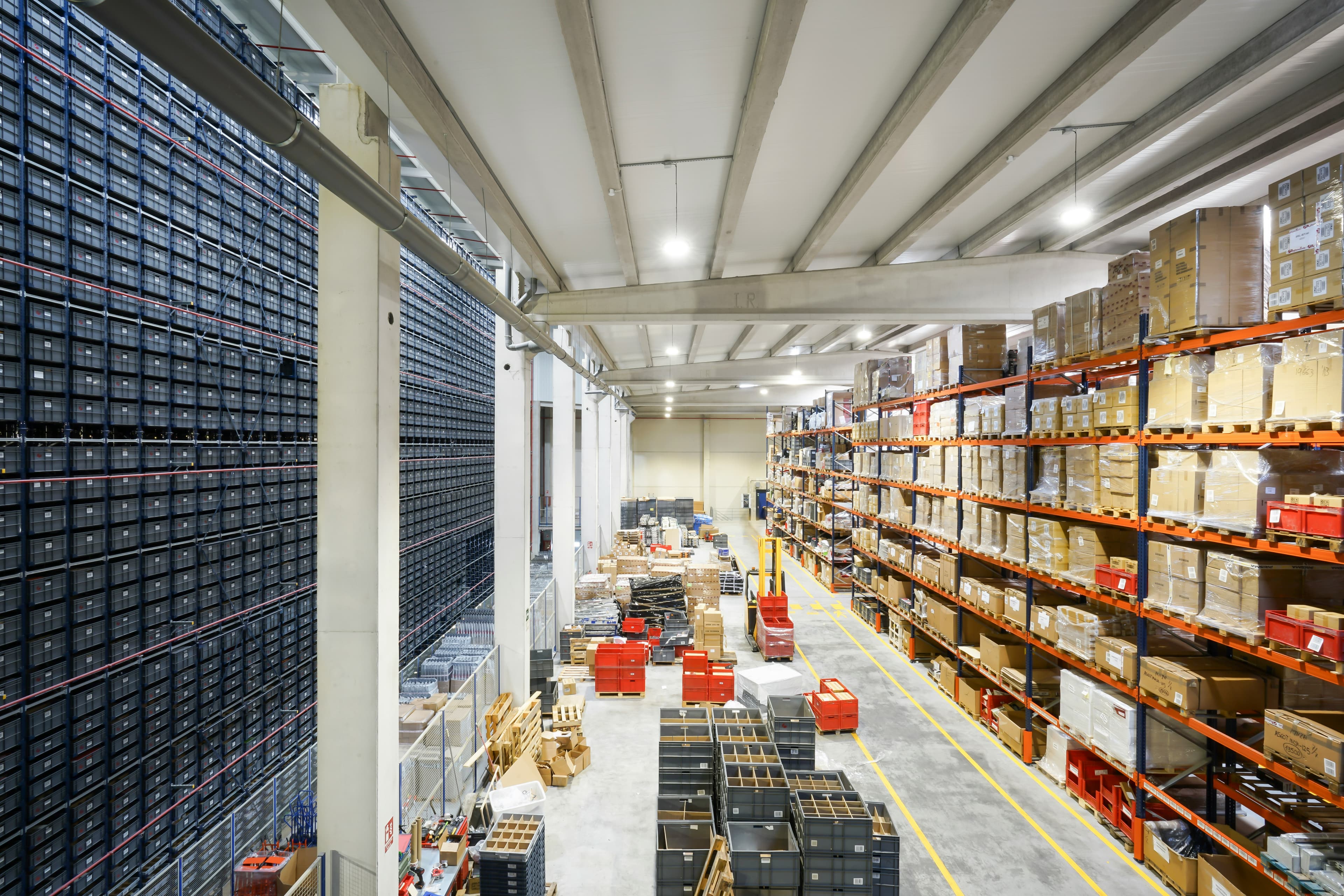
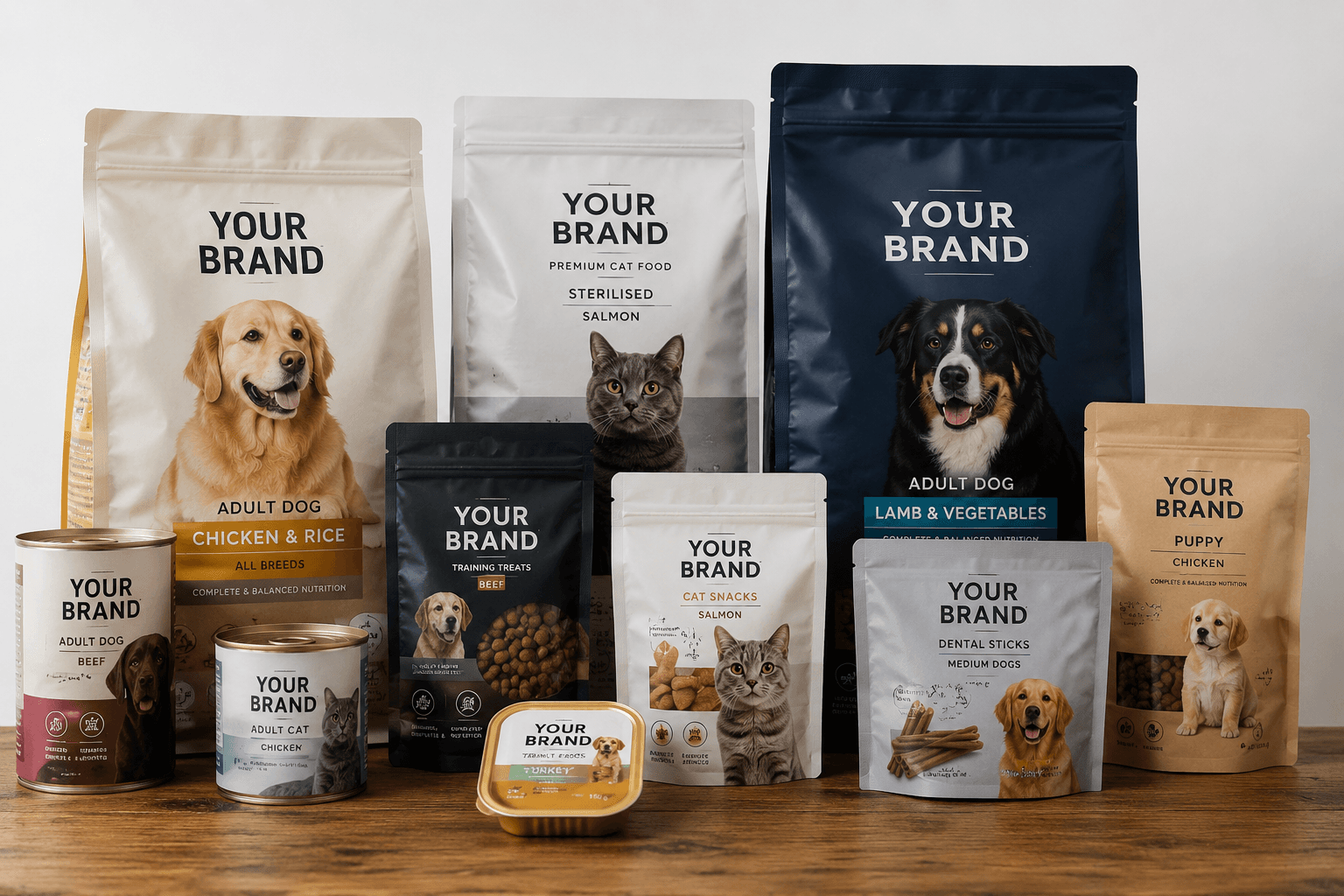
Bulk wholesale sourcing means buying existing, already-branded or unbranded finished product in volume, with no formulation input and no brand-building layer on top — the goal is landed cost and speed to inventory, not differentiation. Private label sourcing means buying into a manufacturer's formulation capability (catalogue-based or custom) and building your own brand identity on top of it. These aren't competing versions of the same activity; they serve genuinely different business models, and conflating them leads buyers to evaluate the wrong tradeoffs against the wrong goal.
Cost structure and typical wholesale price bands
Real 2026 wholesale price bands for private label dry kibble run roughly $0.70-1.20/kg for value formulas and $1.20-2.50/kg for standard and premium formulas — buyers should treat these as a starting reference point, not a quote, since actual pricing depends heavily on format, ingredient sourcing, and order volume. Bulk wholesale of existing finished product typically achieves a lower landed cost per unit than a comparable private label commitment, precisely because there's no brand-building, packaging-design, or formulation-negotiation overhead built into the price — the tradeoff is that margin has to come entirely from volume and operational efficiency rather than from brand premium.

Brand control and quality-risk exposure
Private label creates a direct line between product quality and the buyer's own brand reputation — a formulation or manufacturing problem reflects on the buyer's name, not the manufacturer's, which is a real and underappreciated risk when working across multiple contract manufacturers without consistent quality oversight. Bulk wholesale of already-branded product shifts that reputational exposure back toward the original brand owner (or, for unbranded bulk product, toward whoever the buyer resells it under) — buyers should be clear-eyed about which model they're actually taking on quality-reputation risk under before committing to either.
Have questions before you keep reading?
Get pricing, MOQs and lead times for your market.
Sourcing flexibility under cost or tariff pressure
One of the clearer, recently observed advantages of private label is agility: when a tariff or input-cost shift makes a particular ingredient source less attractive, a private label manufacturer relationship can often pivot the formulation faster than a legacy branded supply chain can, shortening the gap between a sourcing disruption and a corrected product on shelf. Bulk wholesale buyers of finished, already-formulated product have less influence over this kind of pivot — they're dependent on whatever sourcing decisions the original brand or manufacturer makes upstream, on that party's own timeline.
MOQ and commitment level
Bulk wholesale purchasing can sometimes be structured around available inventory lots rather than a fixed production-run MOQ, giving buyers more flexibility on order size in some cases — though large-format bulk deals still typically require meaningful volume commitments to get favorable pricing. Private label carries a more structured MOQ tied to a specific production run and, for anything beyond catalogue formulas, packaging tooling and label approval lead time on top of the production commitment itself.
Which model fits which buyer
Bulk wholesale fits buyers whose business model is built on distribution efficiency and volume — regional distributors, buying groups, and retailers competing primarily on price rather than brand story. Private label fits buyers building a distinct retail or e-commerce brand where shelf differentiation and pricing power matter more than being the absolute lowest-cost unit in the category. Some buyers genuinely run both models across different parts of their range — bulk wholesale for high-turn commodity categories, private label for a smaller number of differentiated flagship lines.
Ready to move forward?
Connect with our team to structure your order, timeline and volumes.
How Candora Petcare supports both sourcing models
Candora Petcare works with buyers running bulk wholesale, private label, or a blended approach across their range, helping map the right model to each part of a buyer's portfolio and connecting buyers with manufacturers whose actual capacity and formulation flexibility fit the chosen strategy.
FAQ
Frequently asked questions
Bulk wholesale means buying existing finished product at volume with no formulation input, optimizing for landed cost and speed. Private label means building your own brand on top of a catalogue or custom-developed formula.
Bulk wholesale of existing finished product typically achieves a lower landed cost per unit, since there's no brand-building, packaging-design, or formulation overhead built into the price the way there is with private label.
From brand premium — natural and super-premium branded formulas can command meaningfully higher margins than mass-market brands, and private label programmes increasingly target that premium-but-affordable gap.
Private label — a formulation or manufacturing issue reflects directly on the buyer's own brand name, unlike bulk wholesale of already-branded product where reputational exposure sits with the original brand owner.
Yes — a private label manufacturer relationship can often pivot a formulation faster than a legacy branded supply chain, while bulk wholesale buyers of finished product depend entirely on the upstream brand's own sourcing decisions.
Yes, and many do — bulk wholesale for high-turn commodity categories where price competition matters most, private label for a smaller number of differentiated flagship lines where brand equity drives margin.
Ready to get started?
Contact our team to discuss volumes, pricing, and supply structures for your market.