Pet Food Wholesale in Norway: What Buyers Should Know
Norway is where Candora Petcare's Nordic positioning is at its strongest, for the simplest possible reason: Saleful AS, the company behind Candora Petcare, is headquartered in Oslo. This guide covers what actually matters sourcing into Norway — its EEA (not EU) status, MVA (VAT) treatment, the import process through Oslo, and how Norway's genuinely home market fits into a wider sourcing plan.

Sourcing through a partner that's actually headquartered here
Every other country guide on this site can offer expertise; Norway is the one market where Candora Petcare can offer local presence as plain fact. Saleful AS, the legal entity behind Candora Petcare, is headquartered at Cort Adelers gate 17 in Oslo. A Norway-bound sourcing enquiry isn't being routed to a market specialist working remotely — it's the home market.
Norway is EEA/EFTA, not EU — and that distinction actually matters
Norway is not an EU member state; it's part of the European Economic Area (EEA) through the EFTA agreement. In practice, Norwegian food and feed legislation is harmonised with the EU's — Mattilsynet, the Norwegian Food Safety Authority, follows EU food and veterinary legislation under the EEA agreement — but buyers shouldn't assume every EU rule, VAT category, or process detail transfers over unchanged. Norway sets some of its own categories and requirements within that harmonised framework, and the differences below are exactly where that shows up.
Importing pet food into Norway
Products of animal origin still require TRACES NT pre-notification and a check at a designated Border Control Post before entering Norway, mirroring the EU process. But Norway adds a requirement that doesn't apply the same way inside the EU itself: importers need a registered responsible person or consignee based in Norway to receive and take responsibility for the goods, or must cooperate with a Norway-based business operator who takes on that role. Buyers used to EU-internal movements should build this into their Norwegian import planning specifically.
A genuinely Norway-specific detail: dog and cat food's import exemption
Norway applies a 10kg limit to personal imports of most animal feed products from the EEA area — but dog and cat food is specifically exempted from that limit. It's a narrow, technical fact, but it's exactly the kind of country-specific detail that separates real Norwegian market knowledge from a generic EEA overview.
Have questions before you keep reading?
Get pricing, MOQs and lead times for your market.
MVA (VAT) treatment: 25% standard rate applies to pet food
Norway's standard VAT (MVA) rate is 25%, with a reduced 15% rate for foodstuffs — but that reduced rate is scoped to human food, and Norwegian VAT categories are set nationally rather than automatically mirroring EU or other Nordic countries' reduced-rate treatment. Pet food falls under the standard 25% rate. Buyers should plan Norwegian pricing around the full 25% figure rather than assuming pet food picks up the same reduced treatment as human groceries.
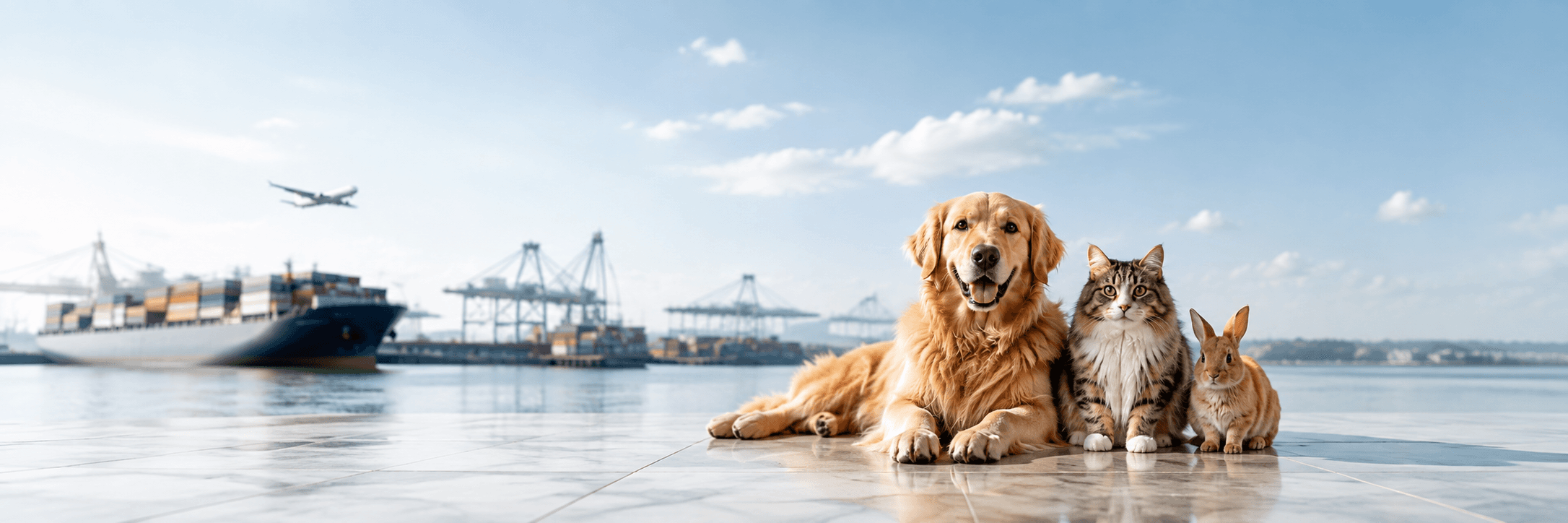
Oslo: Norway's largest container port and true logistics gateway
The Port of Oslo is Norway's largest container port, handling roughly 250,000 TEUs a year against a capacity of up to 400,000, and moved 5.4 million tons of sea cargo in 2024. About 80% of Norway's container goods are destined for the Oslo region, and half the Norwegian population lives within a three-hour drive of the port — making Oslo not just a convenient entry point but the genuine centre of gravity for Norwegian distribution.
Norway's pet food market: cats are the single most common pet
Roughly one-third of Norwegian households own at least one cat — the most common pet ownership pattern in the country — with the cat population around 720,000 as of 2023, after peaking at 783,000 in 2021-2022. Around 17% of households own a dog, with the dog population reaching approximately 500,000 by the end of 2023. As with Sweden, a Norwegian product mix should weight cat food accordingly rather than assuming dog-first demand.
Ready to move forward?
Connect with our team to structure your order, timeline and volumes.
Labelling: Norwegian required, Swedish and Danish accepted in practice
Products sold in Norway must generally be labelled in Norwegian, but Norway's national rules and common practice accept Swedish or Danish labelling as well, under the mutual-intelligibility convention shared across Scandinavian markets. This gives buyers already running Swedish- or Danish-labelled product genuine flexibility for a Norwegian launch — though confirming this in writing with Mattilsynet guidance for the specific product category is still worth doing before relying on it.
FEDIAF alignment under EEA harmonisation
Norway isn't bound by EU regulation directly, but its food and feed legislation is harmonised with EU rules through the EEA agreement, and FEDIAF's nutritional guidelines function as the same practical reference standard for Norwegian-market pet food as they do across the EU. Buyers should still confirm a manufacturer's FEDIAF-aligned formulation and documentation specifically for Norway rather than assuming EU compliance transfers automatically without any Norway-specific check.

How Candora Petcare supports sourcing into Norway
Being headquartered in Oslo means Norwegian-market sourcing runs through the team that's actually based here — coordinating EEA import documentation, the Norwegian consignee requirement, FEDIAF-aligned formulation, and Oslo-routed logistics for buyers building a Norwegian or wider Nordic pet food programme, from first enquiry through to a recurring supply relationship.
FAQ
Frequently asked questions
No — Norway is part of the EEA (European Economic Area) through EFTA, not the EU. Its food and feed legislation is harmonised with EU rules via the EEA agreement, but some processes and categories, like VAT, are set nationally rather than mirroring the EU automatically.
Yes — Saleful AS, the legal entity behind Candora Petcare, is headquartered in Oslo, Norway. This is the company's actual home market, not just a covered territory.
25%, the standard rate. Norway's reduced 15% VAT rate is scoped to human foodstuffs and does not apply to pet food.
Norway requires a registered responsible person or consignee based in Norway to receive imported goods — a requirement layered on top of the same TRACES NT/Border Control Post process used across the EU.
No — dog and cat food is specifically exempted from the 10kg personal-import limit that applies to most other animal feed products entering Norway from the EEA area.
Generally yes, though Swedish and Danish labelling is accepted in practice under Scandinavian mutual-intelligibility conventions — worth confirming for the specific product category before relying on it.
Cats — roughly a third of Norwegian households own a cat (around 720,000 cats), the most common pet ownership pattern in the country, versus about 17% of households owning a dog (around 500,000 dogs).
Ready to get started?
Contact our team to discuss volumes, pricing, and supply structures for your market.