Private Label Pet Food for the Danish Market
Denmark's flat 25% VAT rate means private label margins carry a heavier tax load than in a reduced-rate market like Germany, but the country's premiumisation-driven demand and specialty-retail-led channel structure still make it a workable market for a well-positioned private label launch. This guide covers what a private label buyer specifically needs to know about Denmark.

Why a Danish private label launch needs its own business case
Denmark's flat 25% VAT rate, with no reduced tier for food, sits meaningfully higher than markets like Germany where pet food benefits from a reduced rate — a structural difference that changes the margin math for a private label launch compared to other EU markets. See our general private label manufacturer guide for the underlying private label mechanics that apply regardless of destination market. Buyers should build Denmark's actual VAT figure into their business case rather than reusing assumptions from a lower-VAT EU market.
Danish retail channels for private label pet food
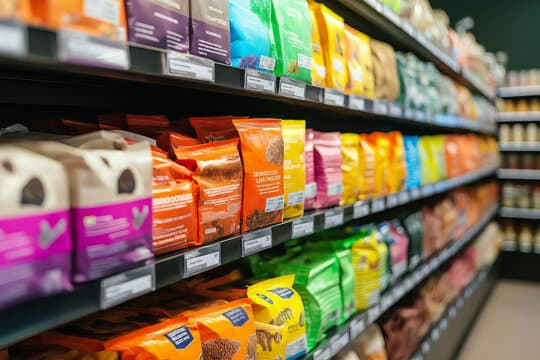
Private label pet food in Denmark moves primarily through specialty pet retail chains, with online retail and supermarkets — discount supermarkets in particular — also carrying meaningful volume. Confirm with your target retail partner which channel positioning (value, mid-market, premium) fits your planned formulation and packaging, since Denmark's premiumisation trend tends to favour specialty retail for higher-tier private label ranges while discount grocery carries more value-focused volume. Buyers should also factor in the growing role of online retail specifically, since a private label range without a clear e-commerce presentation risks missing a meaningful and expanding share of Danish pet food purchasing.
FEDIAF and Danish labelling for a private label launch
A Danish-market private label range needs the same FEDIAF nutrient substantiation as any branded product sold in the EU, plus Danish-language statutory label content under Executive Order no. 1355 of 2015 — see our FEDIAF certification guide and our private label packaging and labelling guide for how these compliance elements should be sequenced ahead of finalising brand artwork. Sequencing compliance content before creative design avoids a costly reprint scenario where artwork is finalised ahead of formulation and label-language confirmation.
MOQ considerations for a Danish private label launch
Standard private label MOQ guidance applies to Denmark the same way it does to any EU market — see our private label MOQ guide for format-specific ranges — though given Denmark's smaller addressable market, buyers may find it more efficient to combine a Danish launch with a wider Nordic private label programme from the outset, rather than treating Denmark as a volume commitment on its own. Raising a combined Nordic volume plan directly with a prospective manufacturer during early sourcing conversations can also open up more flexible first-order minimums than a Denmark-only proposal would on its own.
Have questions before you keep reading?
Get pricing, MOQs and lead times for your market.
Building Denmark's VAT reality into pricing strategy
When modelling private label margin for the Danish market specifically, buyers should build the full 25% VAT rate into pricing scenarios explicitly rather than using a blended EU-average assumption — Denmark's rate is meaningfully higher than several other EU markets in the region, and getting this wrong at the pricing stage is harder to correct after retail listings are already in place.
Working with a Denmark- or Nordic-experienced private label manufacturer
Ask a prospective manufacturer specifically about existing Danish or wider Nordic retail relationships and Danish-language label production experience — this combination reduces both formulation-compliance risk and time-to-shelf for a first Danish private label launch. A manufacturer already producing for Sweden or Norway via Copenhagen's port connections is often a stronger fit than one with only broader EU experience.
Cross-category private label opportunities in Denmark
Buyers launching private label dog food or cat food into Denmark should evaluate whether the same manufacturer relationship can support both categories under one private label brand, simplifying supplier management and potentially improving combined-volume MOQ terms — see our dog food and cat food Danish market guides for the category-specific detail on each. Combining both categories under a single Copenhagen-routed logistics plan can also reduce per-unit freight cost meaningfully compared to sourcing each category through a separate shipment.
Ready to move forward?
Connect with our team to structure your order, timeline and volumes.
Timeline expectations for a Danish private label launch
A Danish-market private label launch generally follows the same 6-10 week formulation-to-production timeline as any EU private label programme, though buyers should add time for Danish-language label review and translation verification if this isn't already built into the manufacturer's standard process from the outset. Buyers combining a Danish launch with a wider Nordic rollout should also build in extra coordination time for aligning label content across each destination market's own language requirements.
Exclusivity and competitive positioning for a Danish private label launch
As with any private label programme, confirm formulation exclusivity terms with a Danish-market manufacturer before committing — given Denmark's smaller retail landscape, a formulation shared across multiple private label clients targeting the same specialty retail channel can dilute positioning faster than in a larger market. Buyers positioning around a specific formulation story should get exclusivity written into the production agreement explicitly, and confirm whether it applies nationally or only within a specific retail channel.
How Candora Petcare supports private label launches in Denmark
Candora Petcare coordinates FEDIAF-compliant formulation selection, Danish-language label compliance, and Danish retail channel context for buyers building a private label pet food range for the Danish market, from initial formulation selection through to first shipment.
FAQ
Frequently asked questions
It can — the flat 25% rate, with no reduced tier, sits meaningfully higher than markets like Germany where pet food benefits from a reduced rate, so build the actual Danish figure into your business case explicitly.
Specialty pet retail chains lead, with online retail and supermarkets — discount supermarkets in particular — also carrying meaningful volume. Confirm channel positioning with your target retail partner before finalising formulation.
Yes — the same FEDIAF nutrient substantiation required for any EU-market product, plus Danish-language statutory label content specific to the Danish market.
Generally the same 6-10 week formulation-to-production timeline as any EU private label programme, plus additional time for Danish-language label review if not already part of the manufacturer's standard process.
Given Denmark's smaller addressable market, many buyers find it more efficient to combine a Danish launch with a wider Nordic private label programme from the outset rather than treating Denmark as a standalone volume commitment.
Their existing Danish or wider Nordic retail relationships and Danish-language label production experience — this combination reduces both compliance risk and time-to-shelf for a first launch.
Ready to get started?
Contact our team to discuss volumes, pricing, and supply structures for your market.
Related
Explore more

Markets
Pet Food Wholesale in Denmark: What Buyers Should Know
Private Label
Private Label Pet Food: The Complete Manufacturer Guide
Private Label
Private Label Pet Food MOQs: What to Expect by Format
Dog Food
Dog Food Wholesale in Denmark
Markets
Sourcing Pet Food from the USA vs. Germany: A Buyer's Comparison