Pet Food Wholesale in Ireland: What Buyers Should Know
Ireland runs a VAT quirk that catches buyers off guard: general animal feedstuff is zero-rated, but feed packaged or sold for dogs, cats, or other domestic pets is specifically carved out to the standard 23% rate. This guide covers what actually matters sourcing into Ireland — that VAT distinction, DAFM registration, FEDIAF compliance, and Dublin Port's role as the country's primary gateway.

Ireland's pet food VAT rule is genuinely easy to get wrong
General animal feedstuff is zero-rated in Ireland — but Revenue's own VAT rate guidance carves out a specific exception: feed that is packaged, sold, or otherwise designated for the use of dogs, cats, cage birds, or domestic pets is excluded from that zero rating and falls under the standard 23% VAT rate instead. A buyer who assumes 'animal feed' zero-rating applies to their pet food shipment, based on the general livestock-feed rule, will get the pricing wrong. Pigeon feed, notably, keeps the zero rate; dog, cat, and cage-bird feed does not.
DAFM registration for animal-origin imports
Importers bringing food of animal origin into Ireland need to register with the Department of Agriculture, Food and the Marine (DAFM) — a standard EU-aligned requirement that applies to pet food containing animal-derived ingredients the same way it applies to any other product of animal origin entering an EU member state.

FEDIAF compliance, same as every EU market
As an EU member state, pet food sold in Ireland needs to meet FEDIAF's nutritional guidelines for the relevant species and life stage — the same EU-wide standard that applies across Germany, France, the Netherlands, and every other EU market covered on this site. See our FEDIAF certification guide for how manufacturers substantiate this.
Importing from outside the EU, and moving product already inside it
Pet food entering Ireland from a non-EU country follows the standard EU-wide control process: TRACES NT pre-notification and a Common Health Entry Document (CHED-P) check for products of animal origin at a designated Border Control Post. Product that has already cleared EU border controls elsewhere, or was produced within the EU, moves into Ireland as a straightforward intra-EU movement — the same principle that applies across every other EU market this site covers.
Have questions before you keep reading?
Get pricing, MOQs and lead times for your market.
Dublin Port: Ireland's primary gateway
Dublin Port is Ireland's largest freight and passenger port, with Lo-Lo container throughput reaching 885,435 TEUs in 2024, up 11.2% year-on-year — the default entry point for most pet food shipments into the Irish market, given Ireland's relatively compact geography and Dublin's position as the country's largest population and commercial centre.
Labelling: English satisfies Irish requirements
The EU's Food Information for Consumers Regulation requires label content in a language consumers can easily understand — and English satisfies that requirement in Ireland without a separate mandatory second-language requirement, unlike several other EU and EEA markets covered on this site (Sweden, Norway, Denmark) where the national language is a hard labelling requirement. This is a genuine practical advantage for buyers already running English-language EU labelling.
Building the real VAT figure into an Irish business case
Because Ireland's pet food VAT treatment (23%) sits meaningfully higher than a buyer might assume from the general animal-feed zero-rating, build the correct 23% figure into Irish pricing and margin models explicitly rather than carrying over an assumption from either the general EU pattern or Ireland's own zero-rated livestock-feed category.
Ready to move forward?
Connect with our team to structure your order, timeline and volumes.
Bulk and private label sourcing for the Irish market
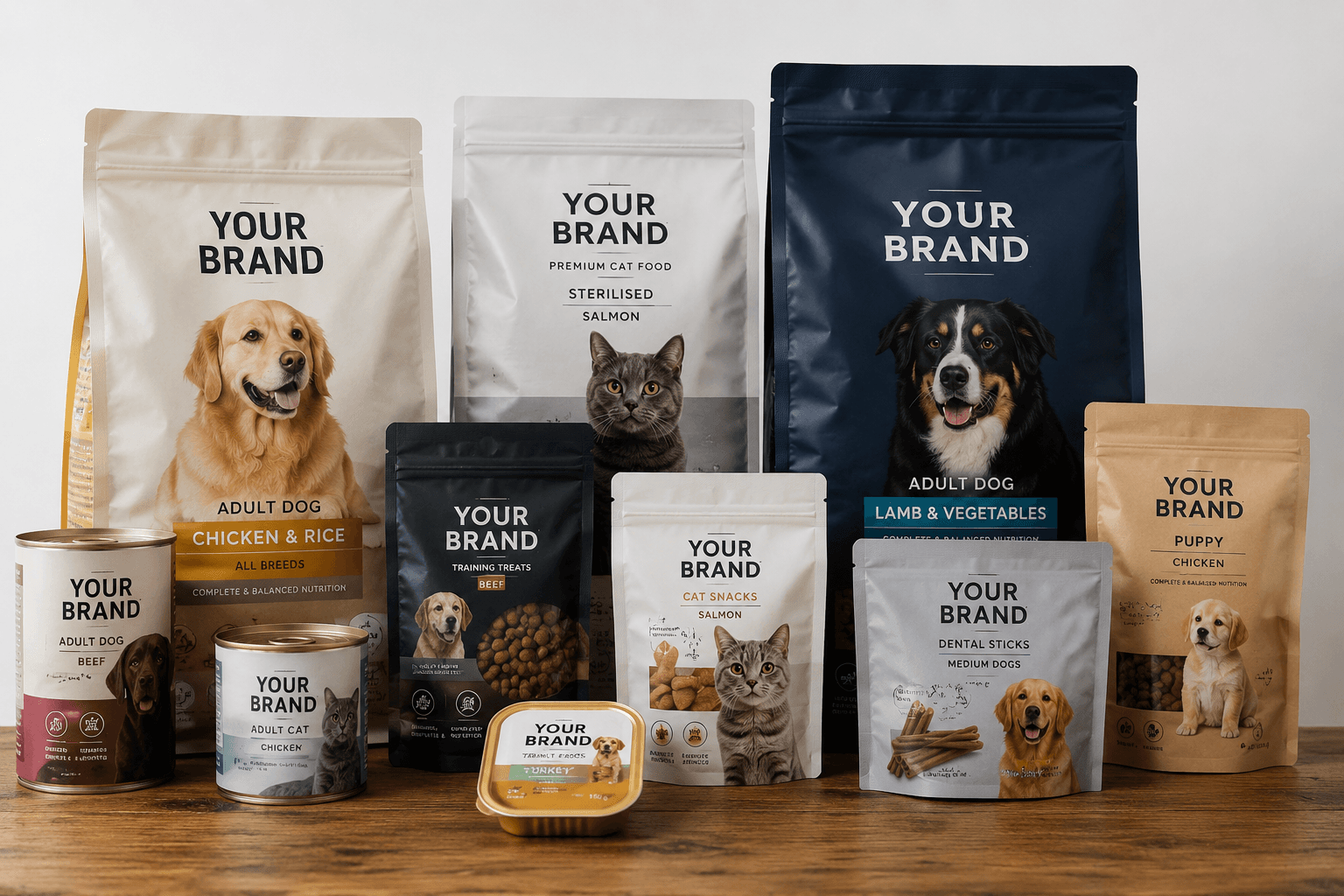
Buyers building an Irish-market pet food range through bulk wholesale or private label should reference our bulk pet food container programme guide and private label pet food manufacturer guide for the underlying mechanics, then layer Ireland's 23% VAT treatment and DAFM registration requirement on top. An existing bulk or private label programme in the UK or the Netherlands can often extend into Ireland efficiently, given Dublin's proximity and the shared English-language labelling advantage — though VAT and DAFM registration still need Ireland-specific verification rather than being assumed to carry over automatically from a UK-based relationship.
Common mistakes buyers make entering the Irish market
The single most common mistake is assuming Ireland's zero-rated animal-feed treatment extends to pet food — it explicitly doesn't, per Revenue's own published guidance, and the resulting margin miscalculation is entirely avoidable with a five-minute check. A second is skipping DAFM registration on the (incorrect) assumption that EU intra-market movement removes the need for it. A third is over-preparing on labelling — Ireland's English-only requirement is genuinely simpler than several neighbouring EEA markets, and buyers sometimes budget unnecessary translation work out of habit.
How Candora Petcare supports sourcing into Ireland
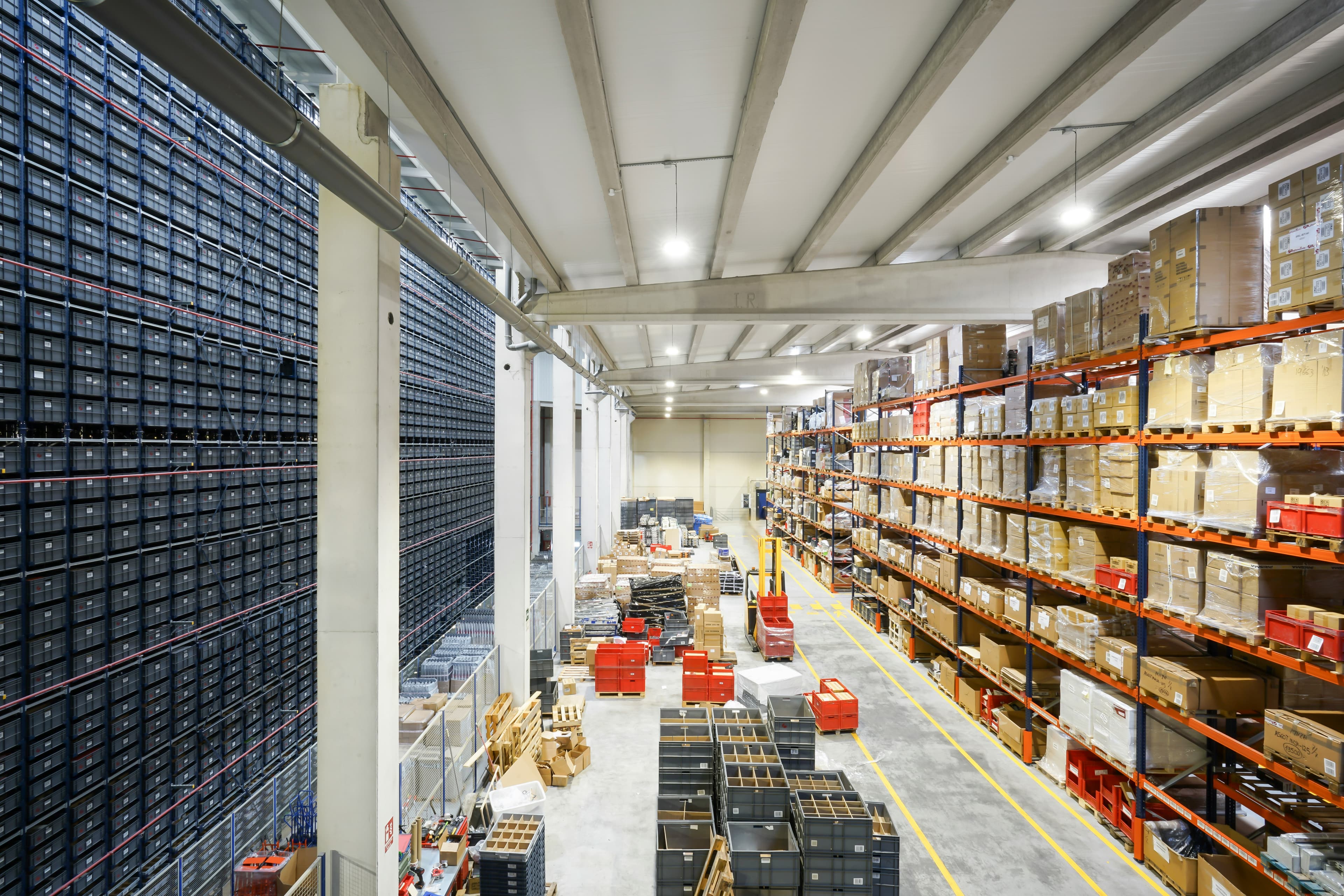
Candora Petcare coordinates DAFM registration guidance, FEDIAF-compliant formulation sourcing, and Dublin Port-routed EU import logistics for buyers building an Irish pet food wholesale programme — including accurate VAT modelling from the outset, given how easy Ireland's specific rate is to get wrong.
FAQ
Frequently asked questions
23%, the standard rate — a specific exception carved out of Ireland's general zero-rated animal-feed treatment. Feed packaged or sold for dogs, cats, or domestic pets is excluded from the zero rate under Revenue's published guidance.
No — general livestock feedstuff is zero-rated, but feed designated for dogs, cats, cage birds, or other domestic pets is specifically excluded and taxed at the standard 23% rate. Pigeon feed is a further, separate exception that keeps the zero rate.
Yes, if it contains ingredients of animal origin — importers of food of animal origin need to register with the Department of Agriculture, Food and the Marine, a standard EU-aligned requirement.
Yes — the same EU-wide FEDIAF nutritional standard that applies across every other EU member state this site covers.
No — English satisfies the EU Food Information for Consumers Regulation's requirement in Ireland, unlike several other EU/EEA markets (Sweden, Norway, Denmark) where the national language is mandatory.
Dublin Port, Ireland's largest freight and passenger port — Lo-Lo container throughput reached 885,435 TEUs in 2024, up 11.2% year-on-year.
Ready to get started?
Contact our team to discuss volumes, pricing, and supply structures for your market.
Related
Explore more

Markets
Pet Food Wholesale in the UK: The Post-Brexit Import Landscape
Certifications
FEDIAF Pet Food Certification: What EU Market Buyers Need to Know
Private Label
Private Label Pet Food: The Complete Manufacturer Guide
Markets
Sourcing Pet Food via the UK vs. the Netherlands: A Buyer's Comparison
Bulk Wholesale
Bulk Pet Food Container Programmes: How FCL Sourcing Works