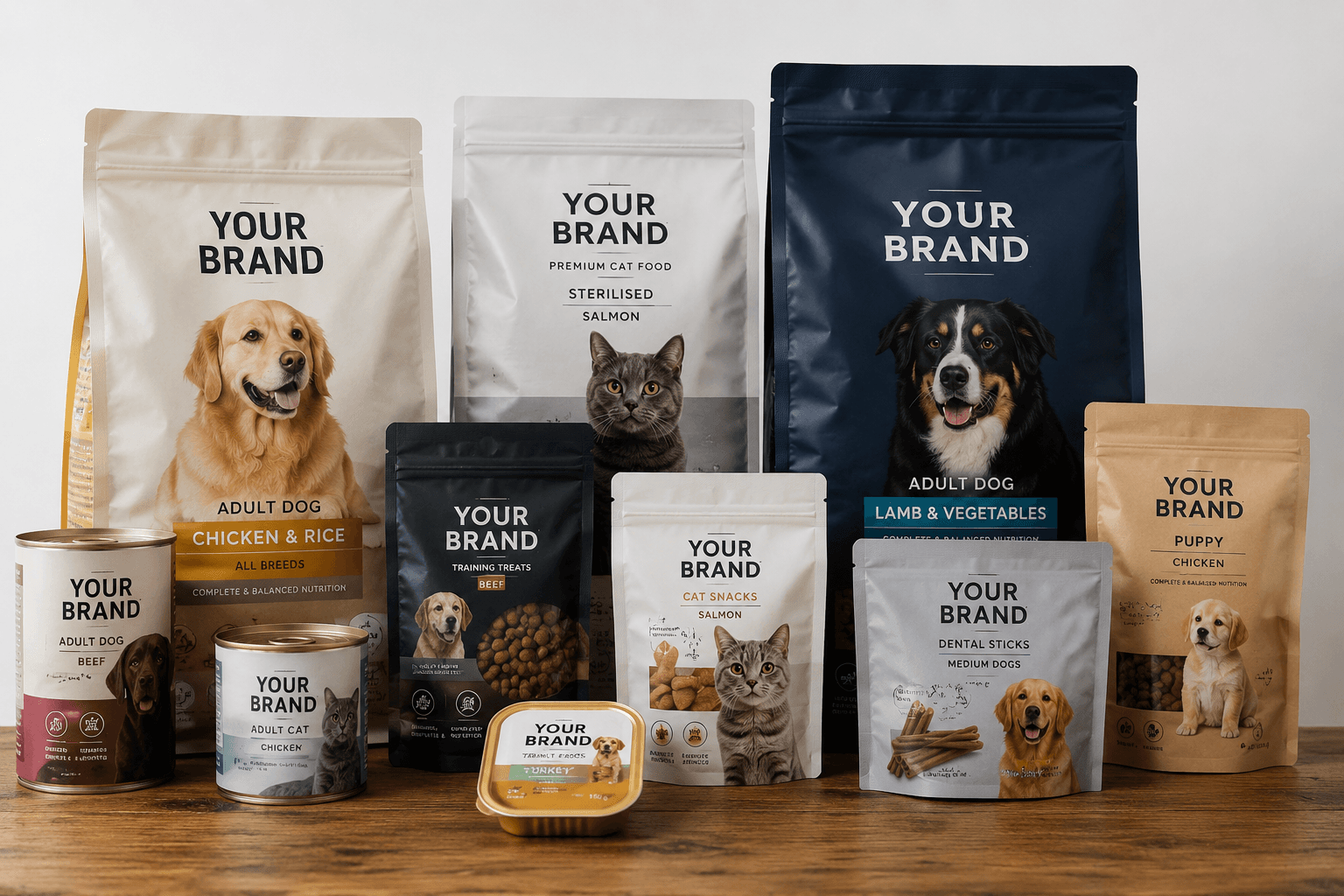
Private Label Pet Food for the German Market
Germany's reduced VAT rate on pet food and its large, diverse retail landscape make it a genuinely attractive market for a private label pet food launch — but buyers still need to navigate FEDIAF compliance, German-language labelling, and channel-specific retail dynamics. This guide covers what a private label buyer specifically needs to know about Germany.

Why Germany is an attractive private label pet food market
Beyond being the EU's largest single market by population, Germany's reduced 7% VAT rate on pet food gives private label margins a structural head start compared to markets where pet food sits at standard VAT — worth building explicitly into your German-market business case. See our general private label manufacturer guide for the underlying private label mechanics that apply regardless of destination market. This VAT advantage is one of the more concrete, quantifiable reasons Germany is often chosen as a first EU private label launch market.
German retail channels for private label pet food
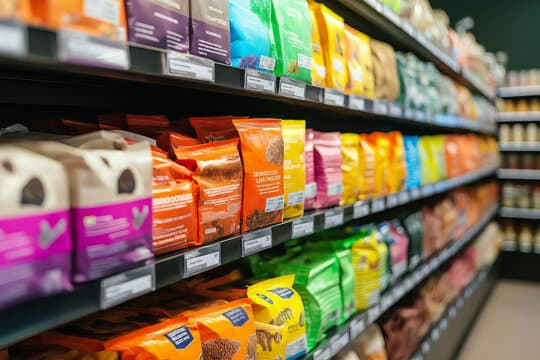
Private label pet food in Germany moves through specialty pet retail, general grocery, and discount retail channels, each with different private label penetration and buyer expectations — confirm with your target retail partner which channel positioning (value, mid-market, premium) fits your planned formulation and packaging before finalising either. Discount retail in particular tends to favour a leaner, value-focused packaging approach than specialty pet retail expects.
FEDIAF and German labelling for a private label launch
A German-market private label range needs the same FEDIAF nutrient substantiation as any branded product sold in the EU, plus German-language statutory label content — see our FEDIAF certification guide and our private label packaging and labelling guide for how these compliance elements should be sequenced ahead of finalising brand artwork. Sequencing compliance content before creative design avoids the costly reprint scenario where artwork is finalised ahead of formulation confirmation.
MOQ considerations for a German private label launch
Standard private label MOQ guidance applies to Germany the same way it does to any EU market — see our private label MOQ guide for format-specific ranges — though buyers targeting a specific German retail channel may find manufacturers with existing German-market experience offer more flexible first-order minimums given established production familiarity. Raise this directly in early sourcing conversations rather than assuming the standard quoted MOQ is the manufacturer's only option.
Have questions before you keep reading?
Get pricing, MOQs and lead times for your market.
Building German VAT advantage into pricing strategy
When modelling private label margin for the German market specifically, buyers should build the 7% VAT rate into pricing scenarios explicitly rather than using a blended EU-average assumption, since the actual German figure is meaningfully more favourable than several other EU markets in the region.
Working with a German-experienced private label manufacturer
Ask a prospective manufacturer specifically about existing German retail relationships and German-language label production experience — this combination reduces both formulation-compliance risk and time-to-shelf for a first German private label launch. A manufacturer that can name specific German retail channels they've already supplied is a stronger signal than general EU experience alone.
Cross-category private label opportunities in Germany
Buyers launching private label dog food or cat food into Germany should evaluate whether the same manufacturer relationship can support both categories under one private label brand, simplifying supplier management and potentially improving combined-volume MOQ terms — see our dog food and cat food German market guides for the category-specific detail on each.
Ready to move forward?
Connect with our team to structure your order, timeline and volumes.
Timeline expectations for a German private label launch
A German-market private label launch generally follows the same 6-10 week formulation-to-production timeline as any EU private label programme, though buyers should add time for German-language label review and translation verification if this isn't already built into the manufacturer's standard process from the outset.
Exclusivity and competitive positioning for a German private label launch
As with any private label programme, confirm formulation exclusivity terms with a German-market manufacturer before committing — some manufacturers will supply the same base recipe to multiple private label clients targeting the same German retail channel unless the contract specifies otherwise, which matters more in a large, competitive market like Germany where several private label buyers may approach the same manufacturer independently. Buyers positioning around a specific formulation story (a particular protein source, a functional claim) should get exclusivity written into the production agreement explicitly, and confirm whether that exclusivity applies nationally or only within a specific retail channel, since some manufacturers will only agree to channel-specific rather than blanket German-market exclusivity.
How Candora Petcare supports private label launches in Germany
Candora Petcare coordinates FEDIAF-compliant formulation selection, German-language label compliance, and German retail channel context for buyers building a private label pet food range for the German market, from initial formulation selection through to first shipment.
FAQ
Frequently asked questions
Yes — the 7% reduced rate on pet food gives German private label pricing a genuine structural advantage compared to markets where pet food sits at standard VAT, worth building explicitly into your business case.
Specialty pet retail, general grocery, and discount retail, each with different private label penetration and buyer expectations — confirm channel positioning with your target retail partner before finalising formulation.
Yes — the same FEDIAF nutrient substantiation required for any EU-market product, plus German-language statutory label content specific to the German market.
Generally the same 6-10 week formulation-to-production timeline as any EU private label programme, plus additional time for German-language label review if not already part of the manufacturer's standard process.
Often yes — evaluate whether one manufacturer relationship can support both categories, which can simplify supplier management and potentially improve combined-volume MOQ terms across the range.
Their existing German retail relationships and German-language label production experience — this combination reduces both compliance risk and time-to-shelf for a first launch.
Ready to get started?
Contact our team to discuss volumes, pricing, and supply structures for your market.